
Download Gentrace – AI model evaluation, automated grading, real‑time monitoring
Overview
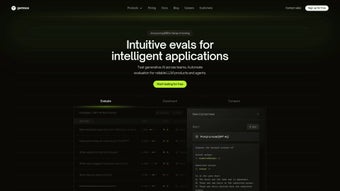
Gentrace is a comprehensive AI model evaluation tool that brings together human insight, automated AI scoring, and sophisticated heuristics to deliver an end‑to‑end grading pipeline for generative AI systems. In traditional AI development workflows, teams spend countless hours manually reviewing outputs in spreadsheets, reconciling scores, and chasing down performance regressions. Gentrace eliminates that friction by automating the entire evaluation lifecycle—from data ingestion and prompt testing to scoring, cost analysis, and production monitoring. The platform’s core strength lies in its ability to blend quantitative metrics (speed, token usage, compute cost) with qualitative feedback (human‑rated relevance, coherence, safety) in a single, searchable dashboard. This dual‑layer approach gives product managers, data scientists, and MLOps engineers a holistic view of model health, allowing them to make data‑driven decisions faster and with higher confidence.
Security is baked into every layer of Gentrace. All data is encrypted in transit via TLS 1.3 and at rest with AES‑256 encryption, role‑based access controls restrict who can view or modify evaluation pipelines, and immutable audit logs provide full traceability of every change. For organizations that must comply with GDPR, HIPAA, or other regulatory frameworks, Gentrace offers on‑premise deployment options as well as a fully managed cloud service that adheres to SOC‑2 standards. The platform also supports single sign‑on (SSO) through SAML 2.0 and OpenID Connect, making it easy to integrate with corporate identity providers.
Whether you are fine‑tuning a large language model, benchmarking diffusion models for image generation, or tracking the cost efficiency of a multimodal pipeline, Gentrace provides the tools you need to keep the entire evaluation process transparent, repeatable, and secure. The software continuously receives updates that add new analytics widgets, improve the Python SDK, and expand support for emerging model families such as vision‑language transformers. By downloading Gentrace today, you gain access to a secure, scalable, and future‑proof solution that grows alongside your AI ambitions.
In addition to core evaluation, Gentrace includes a lightweight reporting engine that can generate PDF or HTML summaries with a single click, making it simple to share findings with stakeholders who are not directly involved in the development process. This reporting capability, combined with built‑in version control for evaluation sets, ensures that every decision can be audited and reproduced, a critical requirement for regulated industries and large enterprises alike.
Key Features
- Automated Grading Engine: Combine human annotations, AI‑generated scores, and rule‑based heuristics to produce a single, normalized grade for each model output. The engine supports weighted scoring, allowing teams to prioritize metrics such as factuality over stylistic flair.
- Real‑Time Production Monitoring (Observe): Stream live metrics such as latency, token usage, and evaluator scores for every request, with customizable alerts that can trigger Slack, Teams, or webhook notifications when thresholds are breached.
- Python SDK: A lightweight, well‑documented SDK that lets developers integrate Gentrace directly into CI/CD pipelines, Jupyter notebooks, or custom testing harnesses. The SDK supports both synchronous and asynchronous calls, making it suitable for batch jobs and streaming workloads.
- Cost & Speed Analytics: Break down per‑inference cost, GPU utilisation, and throughput to optimise both budget and performance. Visual dashboards highlight cost‑per‑token trends and help identify runaway expenses before they impact production.
- Versioned Evaluation Sets: Store and compare multiple evaluation datasets across model versions, enabling regression testing with a single click. Each version retains a full provenance record, including the exact prompts, rubric settings, and hardware context.
- Secure Multi‑Tenant Architecture: Role‑based permissions, encrypted storage, and audit logs protect sensitive data and ensure compliance with industry standards such as ISO 27001.
- Customizable Scoring Rubrics: Define domain‑specific metrics (e.g., factuality for news generation, style adherence for branding) without writing code. Rubrics can be shared across teams, fostering a consistent evaluation culture.
- Dashboard & Export Options: Interactive visualisations, CSV/JSON export, and API endpoints for downstream analytics. Users can embed dashboard widgets into internal portals via an iframe for a unified monitoring experience.
These features are not just a checklist; they are tightly integrated to reduce context switching. For example, a data scientist can run a batch evaluation via the Python SDK, immediately see the results in the Observe dashboard, and trigger an automated cost‑optimisation recommendation—all without leaving the platform. The platform also supports plug‑ins for popular LLM frameworks such as Hugging Face Transformers, OpenAI API, and Cohere, making it easy to bring any model under the same evaluation umbrella.
Gentrace’s extensibility shines when teams need to evaluate multilingual models or multimodal pipelines. The scoring engine can ingest audio transcripts, image captions, or code snippets, and apply language‑specific rubrics that account for grammar, idiomatic usage, or syntax correctness. This flexibility ensures that whether you are building a chatbot for customer support, a code‑generation assistant, or a text‑to‑image generator, Gentrace can adapt to the unique quality signals that matter most to your product.
Regular updates introduce new analytic widgets, such as drift detection charts that compare current model performance against a baseline, and anomaly detection algorithms that automatically flag outlier evaluations. By keeping the tool up‑to‑date, Gentrace guarantees that you always have access to the latest best‑practice evaluation techniques, ensuring a competitive edge in the rapidly evolving AI landscape.
Installation, Usage & Compatibility
Getting Started
Gentrace offers three deployment options: a fully managed SaaS instance, a Docker‑based on‑premise installer, and a Kubernetes Helm chart for large‑scale enterprises. For most users, the SaaS route provides the fastest time‑to‑value—simply sign up, create an API key, and start sending evaluation requests. The SaaS version is continuously updated, meaning you automatically receive security patches, new features, and performance improvements without any manual intervention.
Step‑by‑step SaaS installation:
- Visit gentrace.io/signup and create a free account.
- Verify your email and log in to the Gentrace console.
- Navigate to “API Keys” → “Create New Key”. Copy the generated token.
- Install the Python SDK via
pip install gentrace-sdk. The SDK works on Windows, macOS, and Linux with Python 3.8+. - Initialize the client in your script:
from gentrace import GentraceClient client = GentraceClient(api_key="YOUR_API_KEY") - Define an evaluation set, upload test prompts, and run
client.evaluate(). You can also invoke the SDK from a Jupyter notebook for quick prototyping. - View results instantly in the web dashboard or retrieve them programmatically via
client.get_results(). Export options let you download CSV or JSON files for deeper analysis.
On‑Premise & Kubernetes
For organisations with strict data‑residency requirements, the Docker image (gentrace/server:latest) can be launched with a single command:
docker run -d -p 8080:8080 \
  -e GENTRACE_DB_URL=postgres://user:pass@db:5432/gentrace \
  -e GENTRACE_SECRET=your_secret \
gentrace/server:latesthttp://localhost:8080. The Helm chart further automates TLS certificate provisioning, persistent volume claims, and horizontal pod autoscaling, making it suitable for production clusters on AWS EKS, Google GKE, Azure AKS, or on‑premise OpenShift installations.
To keep the on‑premise deployment secure, you should regularly pull the latest Docker image (docker pull gentrace/server:latest) and apply the provided security patches. The platform also supports rolling updates via Helm, ensuring zero‑downtime when new versions are released.
Supported Operating Systems
Gentrace’s SaaS console works on any modern browser (Chrome, Edge, Firefox, Safari). The Python SDK is compatible with Windows 10/11, macOS 12+, and major Linux distributions such as Ubuntu 20.04, Debian, and CentOS. The Docker image runs on any OS that supports Docker, while the Helm chart targets Kubernetes clusters on any cloud provider (AWS, GCP, Azure) or on‑premise installations.
After installation, the typical workflow involves three stages: (1) Define evaluation criteria using the built‑in rubric editor, (2) Run batch or streaming evaluations through the SDK or REST API, and (3) Analyse the aggregated scores using the Observe dashboard. The platform also provides webhook hooks to integrate evaluation outcomes into existing CI/CD pipelines, enabling automatic gating of model releases based on pre‑defined quality thresholds. Detailed logs are stored for 90 days by default, and can be extended via configurable retention policies.
For developers who prefer a graphical interface, the Gentrace desktop app—available as a downloadable .exe for Windows, .dmg for macOS, and .AppImage for Linux—offers offline access to evaluation results, making it convenient for field engineers working in isolated environments.
Pros, Cons & Frequently Asked Questions
Pros
- End‑to‑end automation removes manual spreadsheet work and reduces human error.
- Real‑time monitoring gives immediate insight into production drift, latency spikes, and cost overruns.
- Extensible Python SDK integrates with any ML workflow, from CI/CD pipelines to interactive notebooks.
- Strong security model with encryption, RBAC, SSO, and audit logs meets enterprise compliance needs.
- Supports both SaaS and on‑premise deployments, giving flexibility for regulated industries.
- Customizable scoring rubrics allow domain‑specific quality assessment without additional code.
- Rich export options (CSV, JSON, PDF) simplify sharing results with non‑technical stakeholders.
- Regular automatic updates keep the tool current with the latest AI evaluation best practices.
Cons
- Advanced custom rubrics may require a learning curve for teams new to structured evaluation.
- On‑premise deployment needs Docker/Kubernetes expertise, which could increase initial setup time.
- Free tier limits the number of concurrent evaluation jobs and the size of stored evaluation sets.
- While the SDK is Python‑centric, native support for other languages (e.g., JavaScript, Go) is currently limited to REST API calls.
- Large‑scale deployments may incur additional costs for storage and high‑throughput monitoring alerts.
FAQ
Is Gentrace really free to use?
Gentrace offers a free tier that includes up to 5,000 evaluation requests per month, basic real‑time monitoring, and access to the Python SDK. Larger teams or enterprises can upgrade to paid plans for higher limits, advanced analytics, and premium support.
Can Gentrace evaluate models hosted on private clouds?
Yes. Using the on‑premise Docker image or the Helm chart, you can run Gentrace within the same network as your private models, ensuring that data never leaves your environment and complying with strict data‑residency policies.
How does Gentrace handle data privacy for human‑annotated scores?
All human annotation data is stored encrypted at rest with AES‑256, and access is governed by role‑based permissions. Exported data can be anonymised automatically before leaving the platform, and audit logs capture every read or write operation for full traceability.
What monitoring metrics are available in Observe?
Observe tracks latency, throughput, token count, GPU utilisation, cost per request, evaluator score distributions, and custom user‑defined metrics via webhook payloads. Dashboards can be customized to surface the exact KPIs that matter to your business.
Is there support for multi‑language models?
Absolutely. Gentrace’s SDK is language‑agnostic; you can send any UTF‑8 payload, and the scoring engine can be configured with language‑specific rubrics for translation quality, code generation, or multilingual chat. The platform also includes built‑in tokenizers for over 100 languages.
How are software updates applied to the SaaS version?
SaaS customers receive updates automatically; the backend is continuously deployed using a blue‑green strategy that ensures zero downtime. Release notes are posted in the Gentrace community portal, and major version changes are communicated via email.
Conclusion
Gentrace consolidates the fragmented world of AI model testing into a single, secure, and continuously updated tool. By unifying automated grading, cost analytics, and real‑time production monitoring, it empowers teams to iterate faster, stay compliant, and keep operational expenses under control. The free tier makes it easy for startups and individual researchers to experiment without upfront costs, while the enterprise‑grade security and on‑premise options satisfy the most demanding regulatory environments.
Downloading Gentrace is straightforward: simply click the “Download” button on the website, choose the deployment model that fits your workflow, and follow the step‑by‑step guide provided in this article. Whether you install the SaaS version on your browser, pull the Docker image for an isolated environment, or deploy the Helm chart to a Kubernetes cluster, the process is designed to be as frictionless as possible. After installation, you can immediately start creating evaluation rubrics, uploading prompts, and generating the first set of grades that will inform your next model release.
Because Gentrace is built as a secure, regularly updated software tool, you can trust that every evaluation you run reflects the latest industry standards. The app is available for download on Windows, macOS, and Linux, and it integrates seamlessly with existing CI/CD pipelines, enabling you to embed quality gates directly into your release workflow. Take advantage of the free tier to test the platform, then scale up with paid plans when you need deeper insights, larger storage, or dedicated support.
Ready to transform the way you assess AI performance? Download Gentrace now, create your free account, and start turning raw model outputs into actionable intelligence. With Gentrace, you get a secure, flexible, and future‑ready evaluation tool that lets you focus on building better AI—rather than wrestling with spreadsheets.